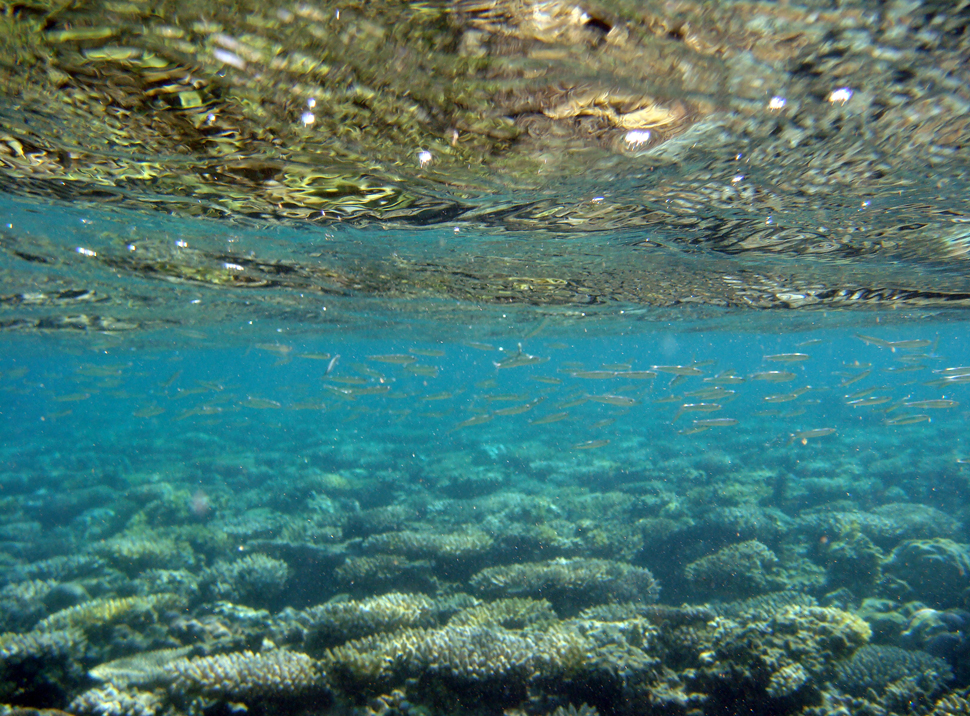
Baseline data and ongoing monitoring is recognised as essential for assessing the impacts of human activities on the marine environment (Alongi, 1989; Gerges, 1994). Enviro Marine are able to design and implement marine monitoring programmes based on published standards that allow clients to assess and document the impacts of there activities on the marine environment in a scientifically robust fashion. As detailed below, there are many considerations in the design of a robust marine monitoring programme.
Once suitable survey techniques have been identified, periodic monitoring and comparison to baseline data can be used to detect the impacts of development on the marine environment (Thia-Eng, 1999). Assessing change is dependent on regular monitoring by standard repeatable methods, particularly as this allows for separation of natural fluctuations and anthropogenically induced change (Brown & Howard, 1985; Sullivan & Chiappone, 1993).
There are two types of impacts from development that require different monitoring strategies (Warnken & Buckley, 2000). Point source discharges of pollutants that are naturally absent or in very low concentrations in the region of interest will generally not require baseline sampling prior to impacts. On the other hand, monitoring and assessment of anthropogenically induced changes in factors that are subject to significant natural fluctuations will often be dependent on baseline data obtained prior to the onset of anthropogenic influence on the parameter (Warnken & Buckley, 2000).
Warnken and Buckley (2000) have proposed a criteria for assessing the scientific quality of monitoring programs in terms of precisely and reliably documenting the impacts of developments, including:
- the monitoring programme needs to discriminate between construction and operational phases of the development;
- baseline monitoring should be conducted prior to development, giving particular consideration to the length and periodicity of sampling;
- seasonal variations should be monitored, both during baseline and operational monitoring;
- spatial design of the monitoring program should incorporate control as well as impact sites;
- measurements and/or samples should be replicated, for each parameter at each site;
- results from predevelopment baseline monitoring should be subject to a priori power analysis; and
- results from operational monitoring should be subject to a posteriori power analysis.
The authors propose that the these criteria will be most readily met by a BACIP (before-after, control-impacted paired) monitoring program. The statistical power of the monitoring program is essential (criteria 6 & 7). The statistical ability to detect natural and anthropogenic change should be investigated before and after monitoring occurs (Warnken & Buckley, 2000). Given adequate statistical power, there is the potential for monitoring to detect environmental impacts even before they become visually evident. In a similar vein, implementation of monitoring programs in developing countries have demonstrated that environmental changes could be detected soon enough for management interventions to take place (Thia-Eng, 1999).
Many monitoring programs begin after development, and hence lack the B in BACIP. The importance of before-impact baseline information is demonstrated in the study of coral reef ecology (see Knowlton & Jackson, 2001). There was a common belief until the 1980s that coral reefs being studied were pristine, however paeloecological data suggest anthropogenic impacts on reefs began much earlier than the first ecological surveys (Knowlton & Jackson, 2001). As another example, the need to identify and measure the initial conditions of benthic communities is also considered essential as the species-specific consequences of eutrophication are hard to predict without prior information (Grall & Chauvaud, 2002).
In the absence of the BACIP monitoring design, retrospective analyses can be performed to account for the before-development condition. For instance annual density banding in massive corals indicating growth and calcification rates provide a means to retrospectively monitor environmental conditions in reef waters (see Barnes & Lough, 1997; Barnes & Lough, 1999).
Please contact us for more information on our capabilities to provide marine monitoring expertise.
Alongi, D.M. (1989) The role of tropical soft-bottom benthic communities in tropical mangrove and coral reef ecosystems. Review of Aquatic Sciences 1: 234-280.
Barnes, D.J. and Lough, J.M. (1997) Several centuries of variation in skeletal extension, density and calcification in massive Porities colonies from the Great Barrier Reef: A proxy for seawater temperature and a background of natural variability against which to identify unnatural change. Journal of Experimental Marine Biology & Ecology 211: 29-67.
Barnes, D.J. and Lough, J.M. (1999) Porites growth characteristics in a changed environment: Misima Island, Papua New Guinea. Coral Reefs 18: 213-218.
Brown, B.E. and Howard, L.S. (1985) Assessing the effects of “stress” on reef corals. Advances in Marine Biology 22: 1-63.
Gerges, M.A. (1994) Marine pollution monitoring, assessment and control: UNEP’s approach and strategy. Marine Pollution Bulletin 28: 199-210.
Grall, J. and Chauvaud, L. (2002) Marine eutrophication and benthos: the need for new approaches and concepts. Global Change Biology 8: 813-830.
Knowlton, N. and Jackson, J.B.C. (2001) The Ecology of Coral Reefs. In: Bertness, M.D., Gaines, S.D., Hay, M.E. (eds) Marine Community Ecology. Sinauer Associates, Inc., Sunderland, Massachusetts, pp 395-422.
Sullivan, K.M. and Chiappone, M. (1993) Hierarchical Methods and Sampling Design for Conservation Monitoring of Tropical Marine Hard Bottom Communities. Aquatic Conservation-Marine and Freshwater Ecosystems 3: 169-187.
Thia-Eng, C. (1999) Marine pollution prevention and management in the East Asian Seas: A paradigm shift in concept, approach and methodology. Marine Pollution Bulletin 39: 80-88.
Warnken, J. and Buckley, R. (2000) Monitoring diffuse impacts: Australian tourism developments. Environmental Management 25: 453-461.